 02 / THE SHELFLibrary
 03 / SLOW SPACEReading Room
 04 / THE JOURNALAbout
PERSPECTIVE / EDITORIAL6 MIN READ
The art of paying attention
A small argument for noticing what the ordinary day has been trying to tell us.
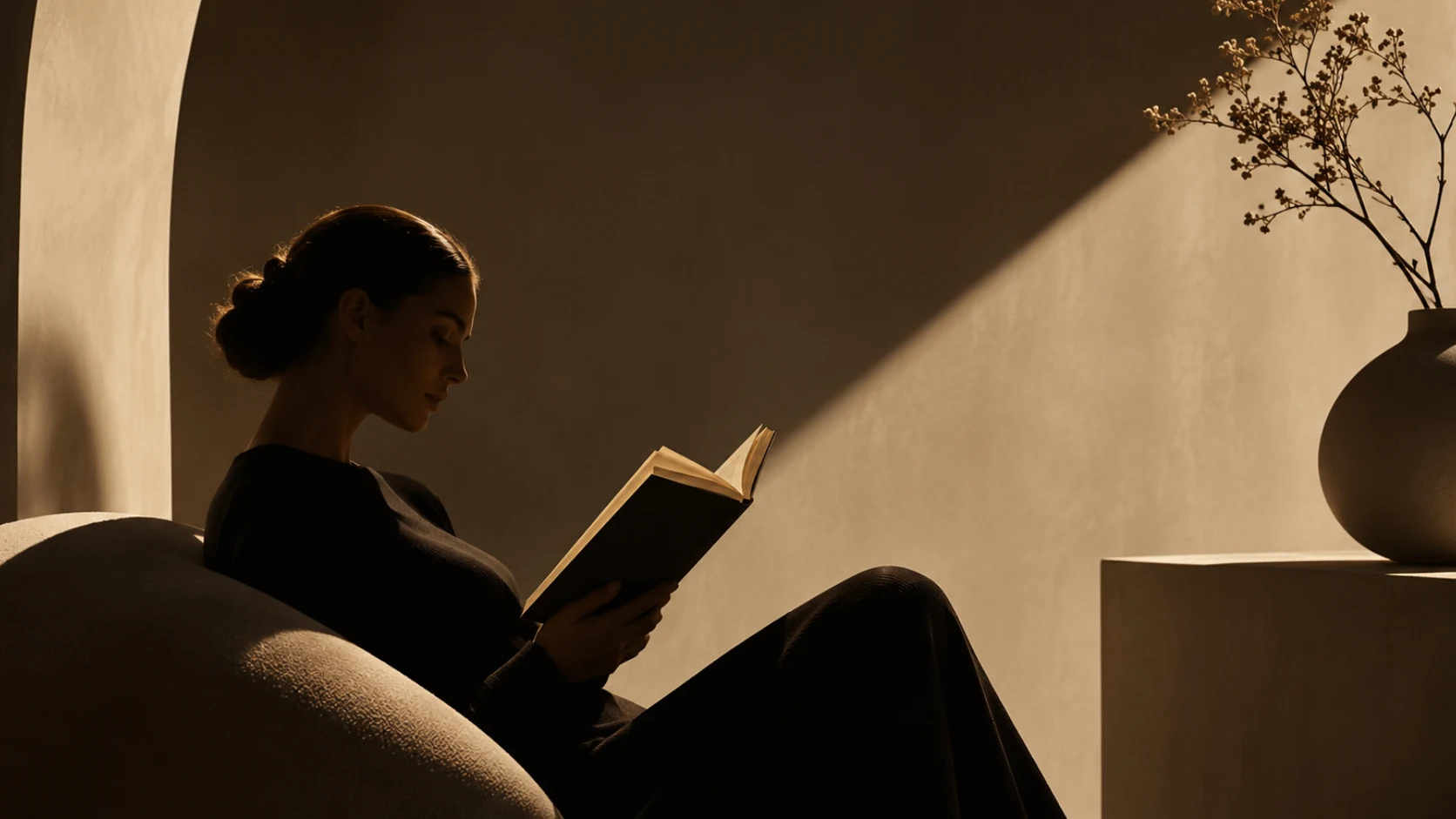
Some things cannot be made to hurry. A room coming into focus. A sentence revealing its real meaning. The moment in which an ordinary afternoon begins to feel like a memory.
An ordinary kind of wonder
Attention is an unfashionable resource. We ask it to move quickly, to divide itself into more pieces, to become useful before it becomes curious. Yet many of the moments we remember arrive without any sense of urgency. A shadow climbs a wall; someone sets a cup down; a page opens at exactly the right line.
To pay attention is not simply to look harder. It is to allow the world to be unremarkable for long enough that its details become visible. In a reading life, this might mean returning to a sentence rather than searching immediately for the next chapter.
A slower page is not an empty page.
A little room around things
A slower pace can be a form of respect. Respect for another person’s unfinished thought, for a question that is still changing shape, for the quiet gaps between one idea and the next. The world rarely rewards those pauses in obvious ways.
But there is often a different kind of abundance inside them. We begin to notice how materials age, how spaces hold memory, how a story continues after the last sentence. Attention makes an ordinary life more textured rather than simply more efficient.
The invitation
Perhaps we do not need a grand ritual. A book can be left within reach. A screen can be turned face down. We can look out of the window without asking the view to explain itself.
The point is not to perfect our attention. It is to remember that the small, overlooked things are sometimes where the most interesting stories begin.
YOU’VE REACHED THE LAST LINE.Explore more stories